
EP 01 · PERFORMANCE REVIEW
idea: one line, typed · script: 4 lines, 19 words
generation: 12 s · 720p · $2.73 all-in
This is the course that makes them. The same rules, the same prompts, the same checks we run on every episode you see below — written down, packed into Claude skills, and handed over.
It is a course, not a magic button. You will set up two accounts, install the toolkit and learn how the pieces work. About an hour of setup, a few hours to get good.
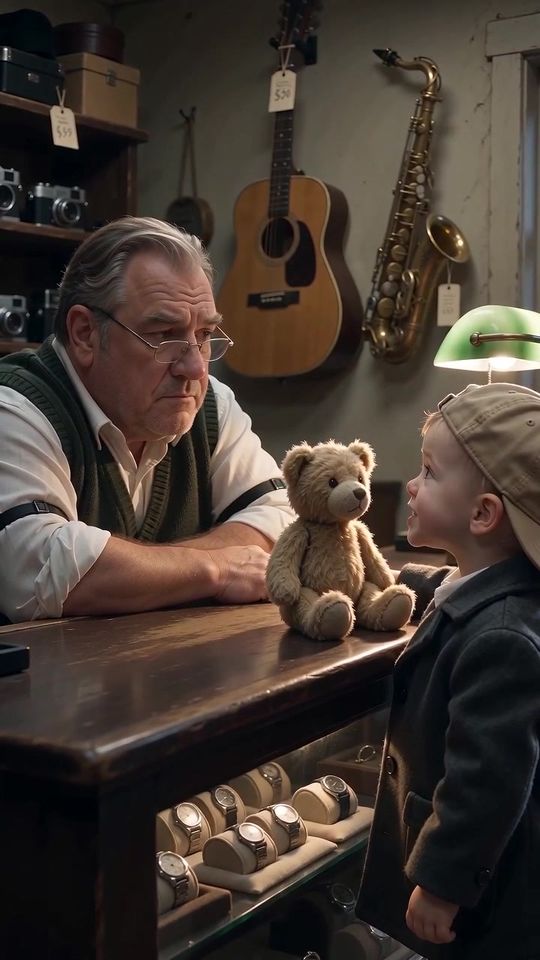 exhibit B · the pawn shop
Not a showreel. Two production episodes, checked by the same QA gate that ships in the pack. Recipe printed under each one — and the full sheet behind episode three is published in the open, free.
idea: one line, typed · script: 4 lines, 19 words
generation: 12 s · 720p · $2.73 all-in
idea: one line, typed · script: 4 lines, 21 words
generation: 12 s · 720p · $1.86, first take
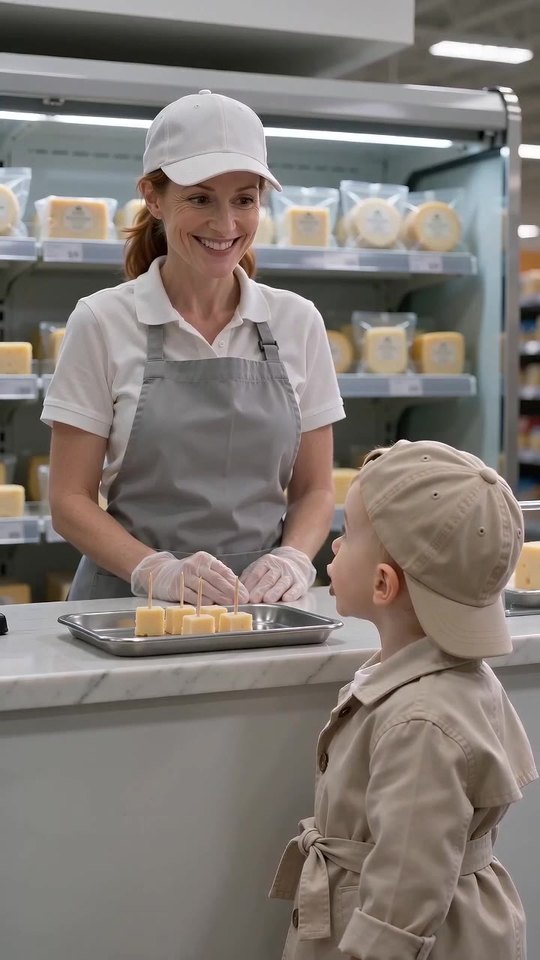
idea: one line, typed · script: 4 lines, 12 words
generation: 12 s · 6 shots · 720p · $1.86, first take
The pipeline behind every episode above — station by station. Everything below ships as files: skills, templates, checklists.
A 10-block character passport — face, proportions, wardrobe, posture, energy — written once and carried into every prompt after it. This is what stops the hero drifting into a different child three shots later, which is the failure that ruins more episodes than any other.
In this pack the passport is written from description. Building it from photographs of your own child is pack two, still in development.
the pawn shop
the kitchenA 15-field master template and a 53-point checklist. Location, light, wardrobe, props, logic rules — filled in once, reused every episode. Plus a starter bank of episode formulas to type on day one.
Every line is simulated against its shot window before anything is generated: syllables × pace vs. seconds. The final shot always gets four — punchline, reaction, one silent beat. That's why the joke lands.
Poses fixed per shot. Cause before effect. One blink per video. Every cut changes two axes. Each rule exists because we broke it once and paid real money for the lesson. You get them pre-broken.
A clinic for failed generations: four failure classes, a symptom-to-fix map, ready correction phrases. One generation tests one hypothesis — so a bad take costs one take, not an evening.

Automatic acceptance: frame rate and duration probed, a contact sheet of every half-second, dialogue transcribed and compared to the script word by word. If it doesn't match, it doesn't ship.

Two accounts, one folder, one key. The setup guide walks each screen. Budget an hour the first time — less if you have used a terminal before.
“make an episode about bedtime.” The pipeline writes, times, checks and generates — asking you only at the two gates that matter.
A finished vertical MP4 with native sound, plus a caption that continues the joke. Label it AI-made and ship.
No surprises after payment. Here is the whole cost and the whole time commitment, written down before the button.
| Claude Pro — $20 / month | The pipeline runs inside Claude Code, and Claude Code starts at the Pro plan. The free tier does not include it. Pro's allowance — roughly 45 requests per five hours — covers an episode a day with room to spare. |
|---|---|
| A video-generation account | Pay as you go: about $1.86 per finished 12-second episode, or a flat monthly subscription if you make them weekly. That money goes to the provider, never to us. |
| About an hour to set up | Creating the two accounts, installing the toolkit, adding the key, running one test episode. The guide covers every screen. No coding at any point. |
| A few hours to get good | Reading the material, writing the character passport for your own hero, and running a handful of episodes until the look locks in. Expect to spend $5–10 on test generations while you learn. |
You can. The models are public, the first generation costs about two dollars, and nothing here is a secret. This is what that road actually looks like.
It has no idea what a joke is. It does not know the punchline goes last, that the answer must land after the line and not before it, or that a beat of silence is what makes people rewatch. Those are decisions you make before you press Run — and the model will happily render all of them wrong.
Trial and error is the standard way to learn this, and here it has a price tag on every attempt. Forty test runs while you work out what the model listens to is roughly seventy dollars spent on nothing you can post.
The face drifts between shots — not because the model is weak, but because nobody stated where each character stands in each shot. The light jumps because its direction was never fixed. The last second melts because the tail was never given anywhere to go. You will not deduce any of this from watching a bad render. You find it the way we did: one broken episode at a time.
Twelve seconds holds a specific number of syllables and no more. The final shot needs four of them or the joke has no room to land. Miss the count and the video feels rushed in a way viewers notice but cannot name — and the scroll keeps going.
Forty rules, and not one of them was invented at a desk. Each was written the day an episode broke: the day a face melted at second eleven, the day a mother stood up before the line that told her to sit, the day a word in the prompt quietly killed the audio. Those runs are already paid for — with our money, not yours.
The pack is that ledger, turned into something that runs: the master template with all fifteen fields, timing counted in syllables, the anti-glitch clinic mapping symptom to fix, and a QA gate that catches the bad take before you ever see it. You start where we are now, not where we started.
The difference is the hero. The first builds characters from description — that is the route every episode above went through. The second builds them from photographs of a real child, and it is still being built.
Characters are written, not photographed. You describe the child and the adult; the pipeline keeps them consistent across the episode. This is the pack that teaches the whole craft.
Drop in photographs of your own kid and the episodes are about them. A birthday message to mum in his own voice, a comedy scene starring your daughter — the joke is yours, the face is theirs.
No subscription on either. Generation costs go to the video provider at cost — about $1.86 per finished episode. Pack two's price is planned, not fixed: it settles when the pack does. The list below hears first, on both.
Pack one is €21, €14 right now — one payment, nothing recurring, no upsells. Pack two is planned at €31, but that number settles when the pack does. Prices include tax: what you see is what you pay, wherever you are. The only other cost is generation, paid straight to the video provider.
No money changes hands today — the preorder takes your email, nothing else. When pack one ships, preorders get the checkout link first, at the €14 launch price. Change your mind? Ignore the email; nothing is ever charged.
Generation only, straight to the video provider: about $1.86 per finished 12-second 720p episode, $0.87 per 480p draft. A test run of six episodes is roughly the price of two coffees.
Both, and the course half matters more. You get working skills, but you also get the reasoning behind them: why four lines, why the punchline goes last, why a face drifts between shots and what fixes it. People who skip the reading get episodes that technically render and land flat.
Yes — Claude Pro, $20 a month, or $17 if you pay for the year. That is the cheapest plan that includes Claude Code, and the pipeline runs inside it. The free tier will not work. Pro's allowance is roughly 45 requests per five hours, which is comfortable for an episode a day.
About an hour of setup: two accounts, the toolkit folder, one key, one test render. Then a few hours across the following days to read the material, write the character passport and dial in the look until it holds across episodes. Budget $5–10 of test generations while you learn.
No. You install Claude Code once by the screenshot guide, then talk to it in plain English. The skills do the technical part. But you do need to be willing to open a terminal and follow instructions carefully.
Claude for everything from script to QA, plus one video-generation provider (the guide covers signing up and adding ~$5 of credit). Both have free-tier or low-cost entry.
That is pack two, and it is still in development — we are not selling it yet and we are not going to pretend otherwise. The plan: you supply 4–6 photographs, close and sharp, from different angles, and the passport builds the character from them. Pack one, the one that is ready, works from written description instead — that is the route every episode on this page went through.
Pack one first — it is the pipeline already running behind this channel, and what remains is packaging, not invention. Pack two follows once the photograph-to-face step passes the same QA gate every episode goes through. Join the list below and you hear on the day, for both.
Every site, every click, every field: how to make one episode by hand, no skills, no code. It works — the result is a decent episode. The pack above is why ours don't look decent. They look finished.
Confirm the email and the guide is yours. After that, the occasional note — new episodes, what we learn making them, the pack when it ships. Unsubscribe any time, link in every email. Privacy.